Introduction: This article focuses on “Optimization Strategies for Bandwidth and Stability of U.S.-Based Server Hosting for E-commerce Websites.” By taking into account the geographical characteristics of the United States, its network resources, and fluctuations in e-commerce traffic, it offers actionable strategies for optimizing bandwidth and stability. These strategies are suitable for e-commerce teams looking to improve user experience and availability.
Before formulating any plan, it is necessary to quantify and break down business traffic: Daily concurrency, promotional peaks, the ratio of payments to static resources, etc. Estimate peak bandwidth using historical access logs and load testing data, and reserve redundancy. At the same time, define acceptable latency and packet loss thresholds to provide a basis for subsequent selection and SLA negotiations.
The United States has a vast territory, and choosing data centers near major user groups or key exchange points can significantly reduce latency. Give priority to multiple data centers or hosting services that can be deployed across availability zones, and pay attention to the upstream ISPs of the data centers, their direct connection capabilities, and backbone peering, in order to reduce cross-domain hop counts and bottleneck risks.
Clarify bandwidth billing and throttling policies: Fixed monthly bandwidth, pay-per-use pricing, or burstable bandwidth—all have their advantages and disadvantages. Reserve peak bandwidth for e-commerce activities, combine traffic cleaning with rate limiting, and design burst traffic buffering and offloading solutions to prevent order failures or page timeouts due to bandwidth exhaustion during peak times.
Reduce handshake costs by enabling HTTP/2 or HTTP/3, TLS session reuse, persistent connections, and appropriate keep-alive settings. Optimize TCP parameters (window size, congestion control) and enable Gzip/Brotli compression, lazy loading of images, and resource merging to reduce bandwidth usage and improve stability during the initial page load and transaction processes.
Place static assets, images, and cacheable APIs on CDN nodes covering the United States, and use hierarchical caching rules and regional strategies to reduce origin requests. Applying appropriate Cache-Control or edge processing to critical payments or personalized interfaces ensures the accuracy of dynamic content while maximizing bandwidth savings and response stability.
Deploy multi-layer load balancing (edge + application layer), combined with health checks and session affinity policies to ensure even traffic distribution. Automated scaling or pre-warming of instances is used to handle promotional traffic, while geographically redundant configurations and data synchronization across different availability zones or data centers ensure that single points of failure do not disrupt business continuity.
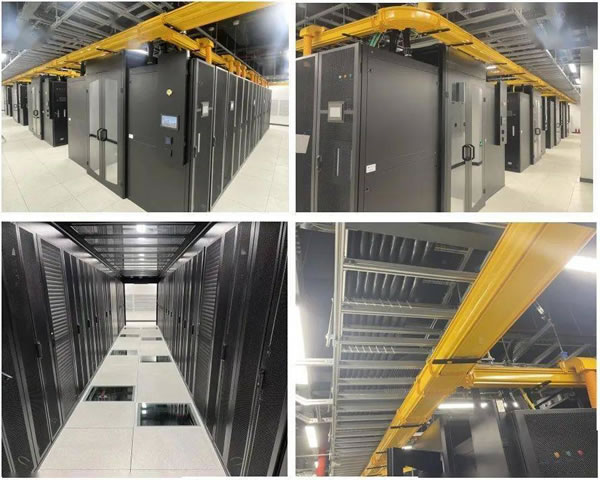
Establish a real-time monitoring system that covers bandwidth utilization, link latency, packet loss, error codes, and application performance, and set up alerts and automated responses. Combined with DDoS protection, WAF, and traffic cleaning strategies to prevent malicious traffic from consuming bandwidth, while retaining traceable logs for review and optimization.
Proceed in five steps: assessment—selection—deployment—stress testing—monitoring: First, complete the traffic simulation and SLA requirement definition, then select the network architecture and bandwidth plan. After deployment, verify the peak capacity through stress testing, and finally continuously optimize through real-time traffic monitoring while recording acceptance metrics.
Optimization of server hosting bandwidth and stability for e-commerce websites in the United States should be data-driven and user experience-focused. Prioritize demand assessment and multi-region redundancy. Combine CDN, load balancing, and transmission optimization to reduce bandwidth pressure, and ensure long-term stability through monitoring and security measures. It is recommended to implement this in phases and complete drills and capacity provisioning before major promotions, to ensure the platform remains stable under peak loads.
- Latest articles
- How To Optimize The System To Improve Bandwidth Utilization And Speed After Purchasing A Vps In Thailand
- Common Misunderstandings About How To Connect To Vietnam Servers To Avoid Triggering Regional Bans
- GP Singapore Server Stability In-depth Evaluation And Deployment Best Practice Guide
- Website Migration Case Sharing SEO And Speed Changes After Switching Between Hong Kong Vps And Japanese Vps
- The Technical Team’s Experience Discusses The Three Core Indicators For Choosing The Best Vps In Korea
- Performance Tuning And Monitoring Methods Of Vietnam Cn2 Network In High Concurrency Scenarios
- Buy Cloud Servers In Thailand At Low Prices, Compare Manufacturer Discounts And Long-term Operation And Maintenance Costs
- Enterprise Deploys Japanese Native Dynamic IP Address Load Balancing And Failover Solution
- Use Vietnam's Native IP Cloud Server To Build A Private VPN And Corporate Intranet Acceleration Solution
- How To Choose The Appropriate HKEX Computer Room Server Configuration For Financial Business
- Popular tags
-

Utility Tools What Is The Abbreviation Of The American Server? Online Query And Conversion Tool Recommendation Instructions
describes common abbreviations and naming conventions for us servers, recommends utility tool categories for online query and conversion (ip geographical query, dns detection, latency test, batch conversion and naming standardization), and provides operational suggestions to support deployment and seo optimization. -

How To Use Indicator Weights To Build A Ranking List Of Us Server Hosting Providers And Conduct Local Comparisons
detailed explanation on how to self-build the us server hosting provider ranking list through indicator weights, including indicator selection, weight distribution, data collection and verification, calculation methods and local comparison and selection strategies to help decision-making and seo local optimization. -

Security Transaction Contract Template And Precautions For Corporate Procurement Of Us High-defense Servers
this article provides the key points and precautions for a security transaction contract template when enterprises purchase high-defense servers from the united states, covering the contract structure, key terms, sla, legal compliance and risk prevention, making it easier to formulate compliant and enforceable procurement contracts.